
Why global teams fail and how to prevent them from falling apart
- August 13, 2026
- Posted by: Maria Rubio
- Category: Global leadership

Successful Global Teams Don’t Happen by Chance
Working with global teams comes with challenges. Failed global experiments lead to skepticism around remote talent. Here are five keys to consider when building an international team to prevent them from falling apart.
Global talent has become a strategic advantage for growing businesses. Companies are no longer limited by geography when searching for the right people, and many organizations are choosing to hire international teams. However, not every global initiative succeeds. More often than not, global teams tend to be a failed experiment which gives bad experience to firms who have struggled to properly build international teams.
One of the mistakes that companies make is treating global teams as a vendor, a cost-cutting measure rather than long-term team members. Poor integration, lack of communication, unclear expectations, and inadequate onboarding inevitably leads to
frustration on both sides. These failed experiences can create skepticism toward remote and international talent, even when the real issue lies in the way the team was built, not the talent itself.
Building a Global Team the Right Way
Understanding the business is a key part of finding the right fit for that specific role the company is looking for. Finding that one thing that separates their business from the rest of the pack is important to helping companies scale globally with success. Growing companies find that expanding their team’s work hours and production levels helps them accomplish that mission.
Many factors can drive a company to build an offshore team, like price compression, tighter deadlines or increased amount of work. Regardless of the reason, the challenge remains the same: building an effective global team requires more than hiring people from a different country.
A successful global workforce depends on the right infrastructure to support it. “Not all international team builds are done correctly, and wasting time trying to figure out the best method is one of the things we rescue our clients from doing”, says Brett Loxterman, Managing Director of Growth at GR8 Global.
For Brett, there are five key factors that prevent global teams from falling apart.
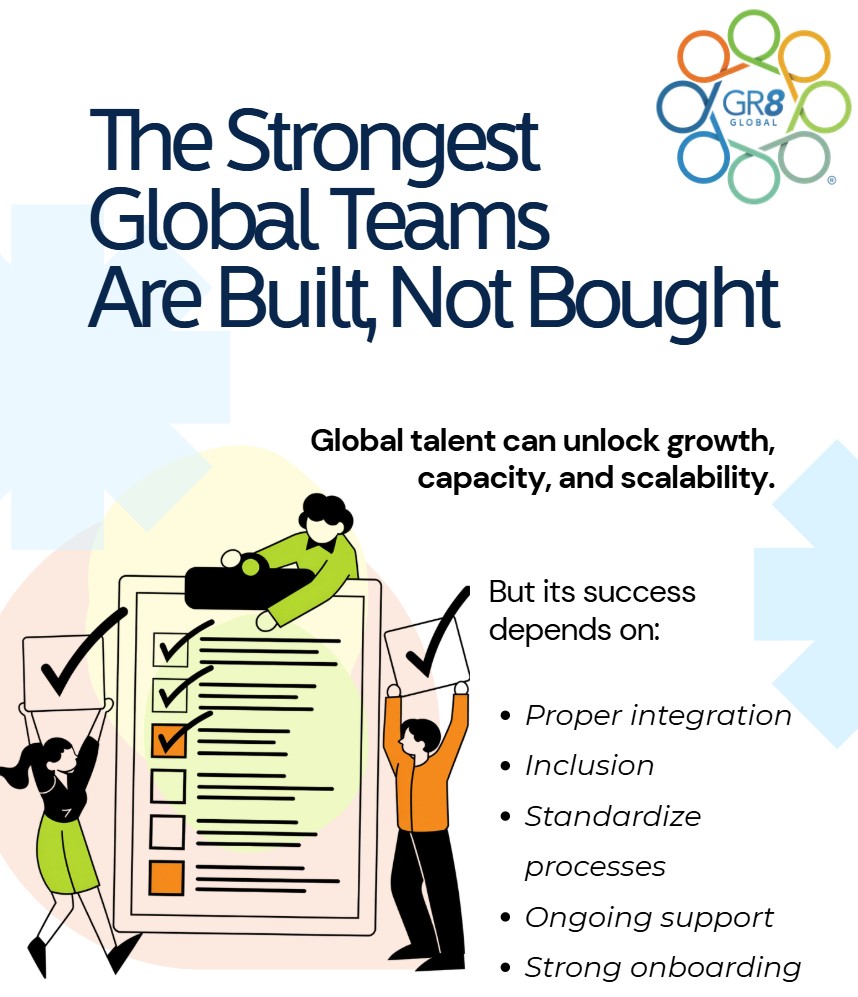
1. Proper Integration: Every successful team member starts with a strong introduction to the business. “All starts with a proper onboarding and expectation setting. This is true for any new employee, regardless of if they are onshore or offshore”, Brett explains. Clear expectations, defined responsibilities and structured onboarding process help new hires understand their role from day one.
2. Make People Feel Welcome: Employees who feel connected to their team are more engaged, productive and committed. “The employee has to feel welcomed to be part of the team”, says Brett. Including global employees in meetings, company updates, and checking in to see how they’re feeling is essential to make them feel they’re part of the team.

3. Standardized Processes and Tools: No one can succeed without the proper resources. Global team members should have access to the same systems, documentation, workflows, and support as their coworkers, regardless of their location. “They have to be given the tools to do their job successfully”, states Brett. Standardized processes create consistency, reduce confusion, and enable international teams to perform well.
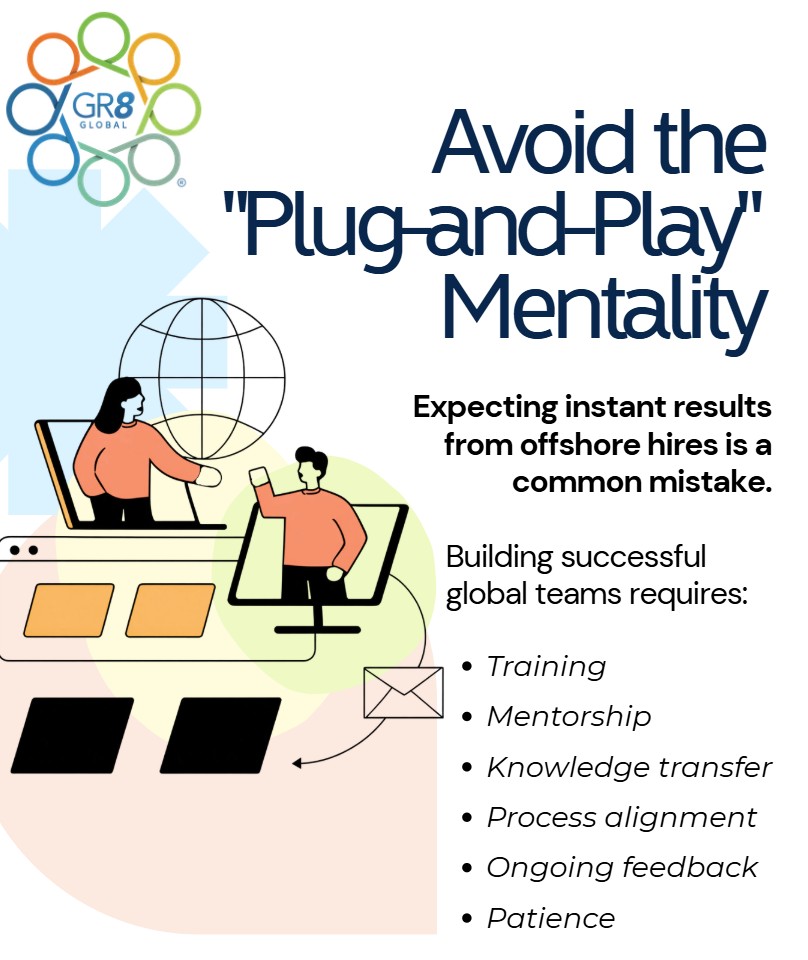
4. Avoid the “Plug-and-Play” Mentality: One of the biggest mistakes companies make is assuming that an offshore hire will immediately fit into existing processes without the proper support. “Offshore team builds are never plug-and-play”, Brett explains. “They take time to maneuver into an organization, and that integration must be done with care”. Building trust, understanding workflows and aligning to the culture takes time. Companies that invest in process and training are more likely to succeed and see long-term results.
5. Strong Onboarding: Onboarding should go beyond training. It should help employees understand the company’s mission, culture, and growth opportunities. “Without strong onboarding procedures in place, the addition of international team members could be more harmful than helpful to any organization”, Brett emphasizes. The power of dedicated support and strong onboarding structure lays the foundation for future success.
Building a global team is like building a clock. Every piece must work together to keep the system running smoothly. If one gear is out of alignment, the entire operation can be affected. When companies provide the right tools, clear procedures, open communication, and opportunities for growth, global professionals become invested in the company. They stop feeling like outsourced resources and begin to see themselves as valued members of the team.
“We have firms who came to GR8 Global only looking to add one professional, but have quickly realized that creating a team structure is highly beneficial to scaling their growing business” states Brett. In one case, a client experienced a threefold increase in operational capacity after adopting a global team strategy. “The increased revenue allowed the business to add a US-based employee as well, something that would have previously been a stretch with their client base”, shares Brett.
Beyond helping organizations build successful international teams, GR8 Global is committed to developing world-class professionals through its US Readiness Program. Creating career paths is especially important. Employees who can envision growth within the organization are far more likely to stay engaged and contribute at a higher level. The program is designed to prepare the next generation of global professionals for real‑world success in the US accounting ecosystem.