AI and Global Teams in Transportation and Logistics
- September 24, 2026
- Posted by: Maria Rubio
- Category: Transportation & logistics

How AI and Global teams are reshaping the Transportation and Logistics Industry
AI-powered logistics paired with global workforce are helping transportation companies overcome talent shortages, optimize supply chains, and create a future-ready growth strategy
The future of the transportation and logistics industry is already here. Freight companies are adopting AI technology. A 2024 research conducted by Prismetric indicates that the worldwide market for artificial intelligence in transportation is estimated to be worth $2.11 billion in 2024 and to increase to $6.51 billion dollars by 2031, reflective of the increasing adoption of AI solutions across logistics, fleet management, warehousing, and supply chain operations.
Self-driving cars are here, and industries are picking up the pace. Business investors are looking closely at statistics in the transportation industry. AI is already reshaping the future and companies are preparing themselves to have the necessary qualifications to face up to the future partnering with younger generations with AI knowledge.
Today, the transportation and logistics industry is entering a new era. Faced with growing customer expectations, persistent labor shortages, and increasing operational complexity, companies are turning to two powerful solutions: artificial intelligence (AI) and global teams.
Together, these forces act as a new strategy to improve efficiency, reduce costs, fill critical talent gaps, and build more robust future-ready supply chains. What was once considered a traditional, driver-centered industry, is mutating into a technology-driven ecosystem powered by data, automation, and global talent.
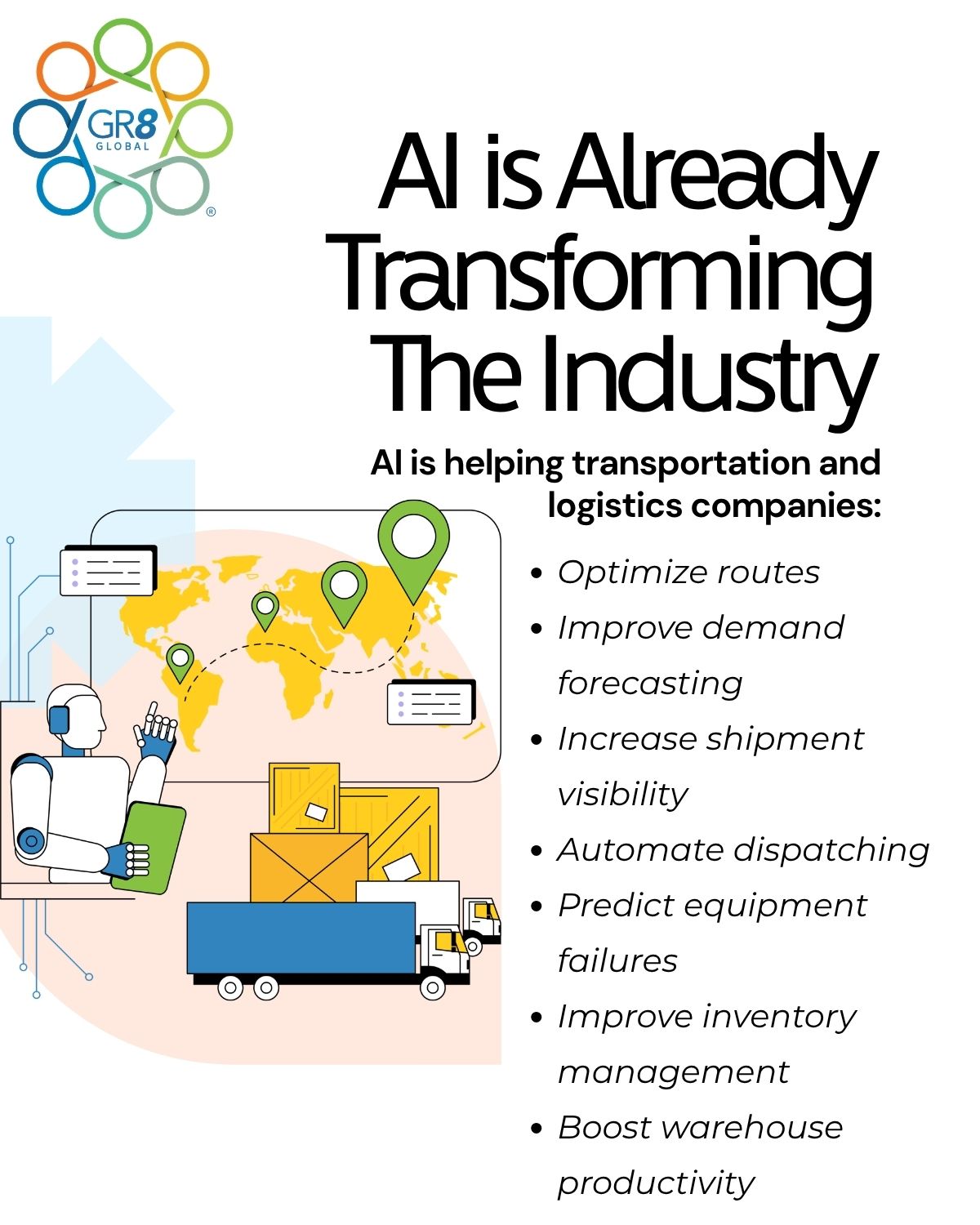
How AI Is Transforming Logistics Operations
The industry has moved beyond the experimental stage of AI in transportation and is now a necessary strategic investment for companies looking to gain a competitive advantage in the market. Undeniably, AI is reshaping logistics operations, enabling companies to:
- Optimize routes and reduce fuel consumption
- Improve demand forecasting
- Enhance shipment visibility
- Automate dispatching and scheduling
- Predict equipment failures before they occur
- Improve inventory management
- Increase warehouse productivity
Meanwhile, as logistics networks grow more complex and workforce shortages increase, the industry must connect three key resources: in-person workers, AI-powered solutions, and global teams. A worldwide talent pool can help bridge the gap between traditional transportation expertise and the AI skills needed to optimize modern operations.
For instance, AI-powered route optimization can lower fuel use and transportation costs by analyzing traffic patterns, delivery schedules, and real-time conditions. To implement these technologies effectively, companies need specialized talent that matches their operational needs, creating new opportunities for remote professionals in transportation.
Talent Shortage in the Transportation Industry
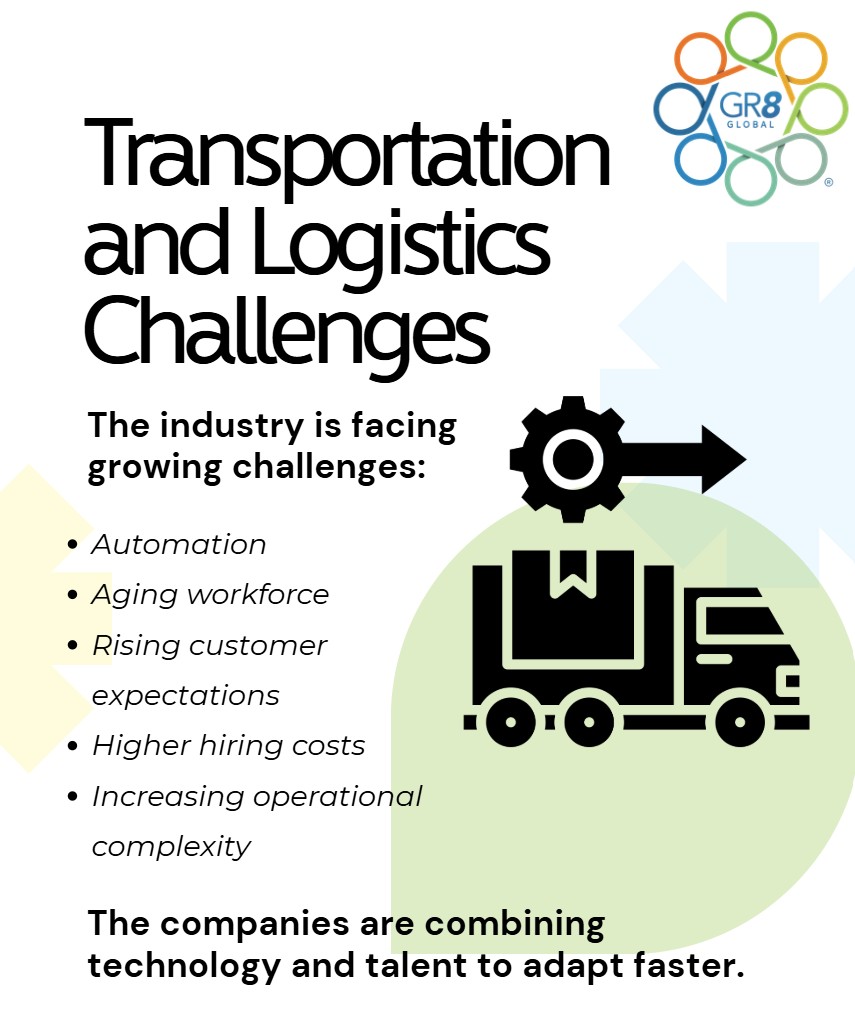
Although AI presents enormous opportunities, the transportation and logistics sector faces a significant workforce challenge.
According to industry research, the sector is expected to face a driver shortage of 174.000 workers by the end of 2026, while demand for supply chain and logistics talent continues to increase. Organizations are also experiencing rising hiring costs and growing competition for qualified professionals. Additional workforce challenges include:
- A 31% year-over-year increase in demand for supply chain talent in 2026
- A 22% increase in logistics hiring costs
- 76% of supply chain organizations reporting workforce shortages
- 96% of transit agencies experiencing staffing shortages that impact service delivery.
In fact, these shortages extend far beyond truck drivers. Companies are struggling to hire key components for the transportation industry, such as Logistics coordinators, Route planners, Supply chain analysts, Inventory specialists, Transportation managers, and Warehouse technology operators. As experienced workers retire and business demands increase, companies must find alternative ways to access skilled talent.
The Technology Skills Gap in Transportation and Logistics
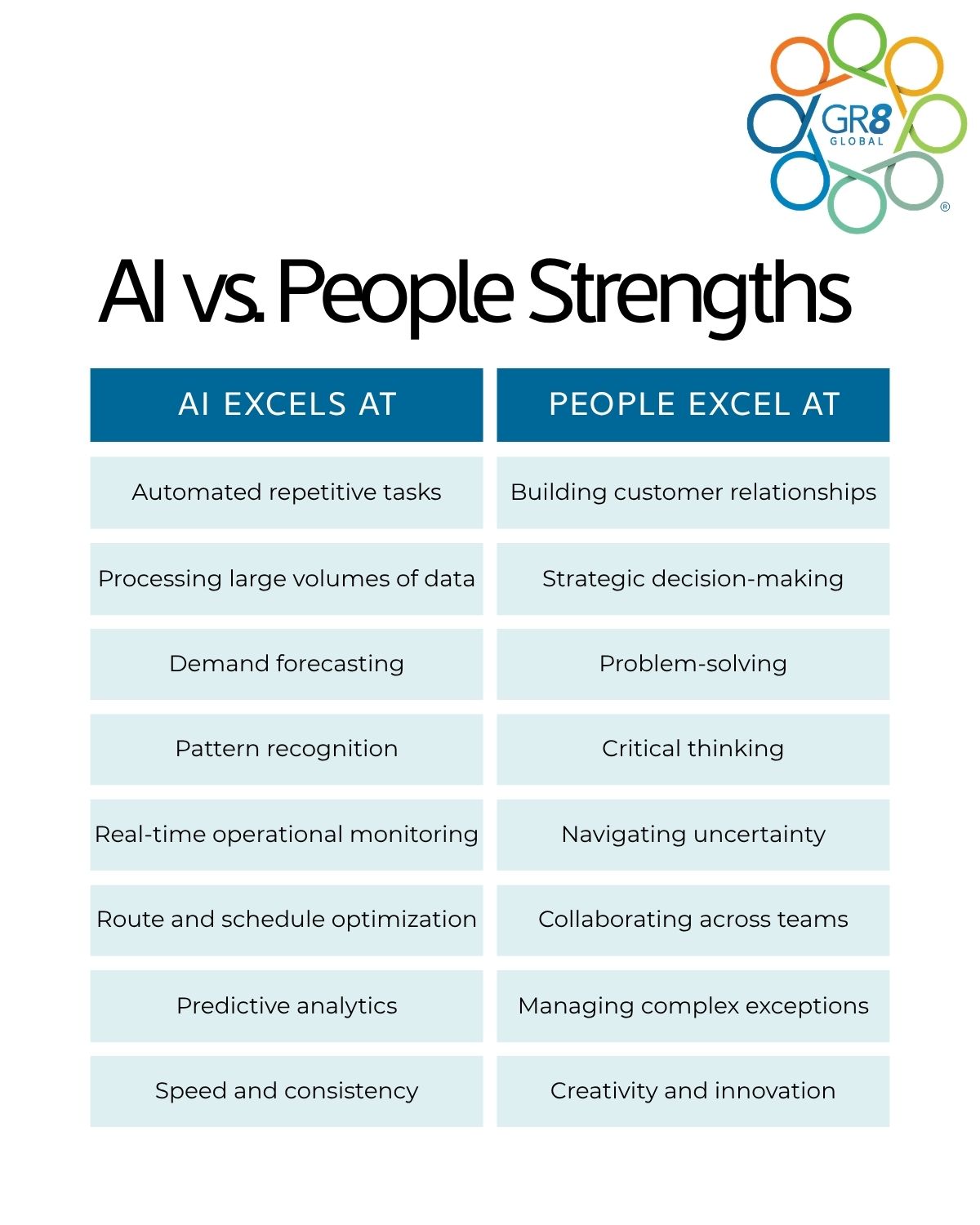
A 2025 MIT research found that 1.1 million full-time transportation employees could be impacted by AI, with the most exposure in roles involving information processing, decision-making, and quantitative tasks. A common concern surrounding AI is workforce displacement. However, recent research suggests that AI is more likely to augment jobs rather than replace them entirely. AI excels at repetitive and data-intensive tasks, while humans remain essential for:
- Relationship management
- Strategic decision-making
- Problem-solving
- Customer service
- Exception handling
- Complex operational planning
As a result, employees can focus on higher-value activities that drive business growth. Organizations are increasingly seeking professionals who can effectively collaborate with AI systems and translate insights into action.
In addition to this, the transportation workforce is experiencing a significant skills transformation. Modern logistics operations now rely heavily on:
- Transportation Management Systems (TMS)
- Warehouse Management Systems (WMS)
- ERP platforms
- AI-powered forecasting tools
- Automated warehousing technologies
- Data analytics platforms
As these technologies become standard, employers are finding that large applicant pools do not necessarily translate into qualified candidates.
The most difficult positions to fill are operational roles that require both logistics knowledge and technology proficiency. This includes route planners, logistics coordinators, warehouse operators, and maintenance technicians who must interact with increasingly sophisticated systems.
Why Global Teams Are Becoming a Competitive Advantage
As talent shortages intensify, many transportation and logistics companies are expanding beyond local hiring and embracing international professionals. Expanding the talent pool globally provides access to skilled talent who can support functions such as:
- Dispatch operations
- Load planning
- Freight brokerage support
- Customer service
- Data analysis
- Back-office operations
- Supply chain coordination
- Technology support
- AI implementation projects
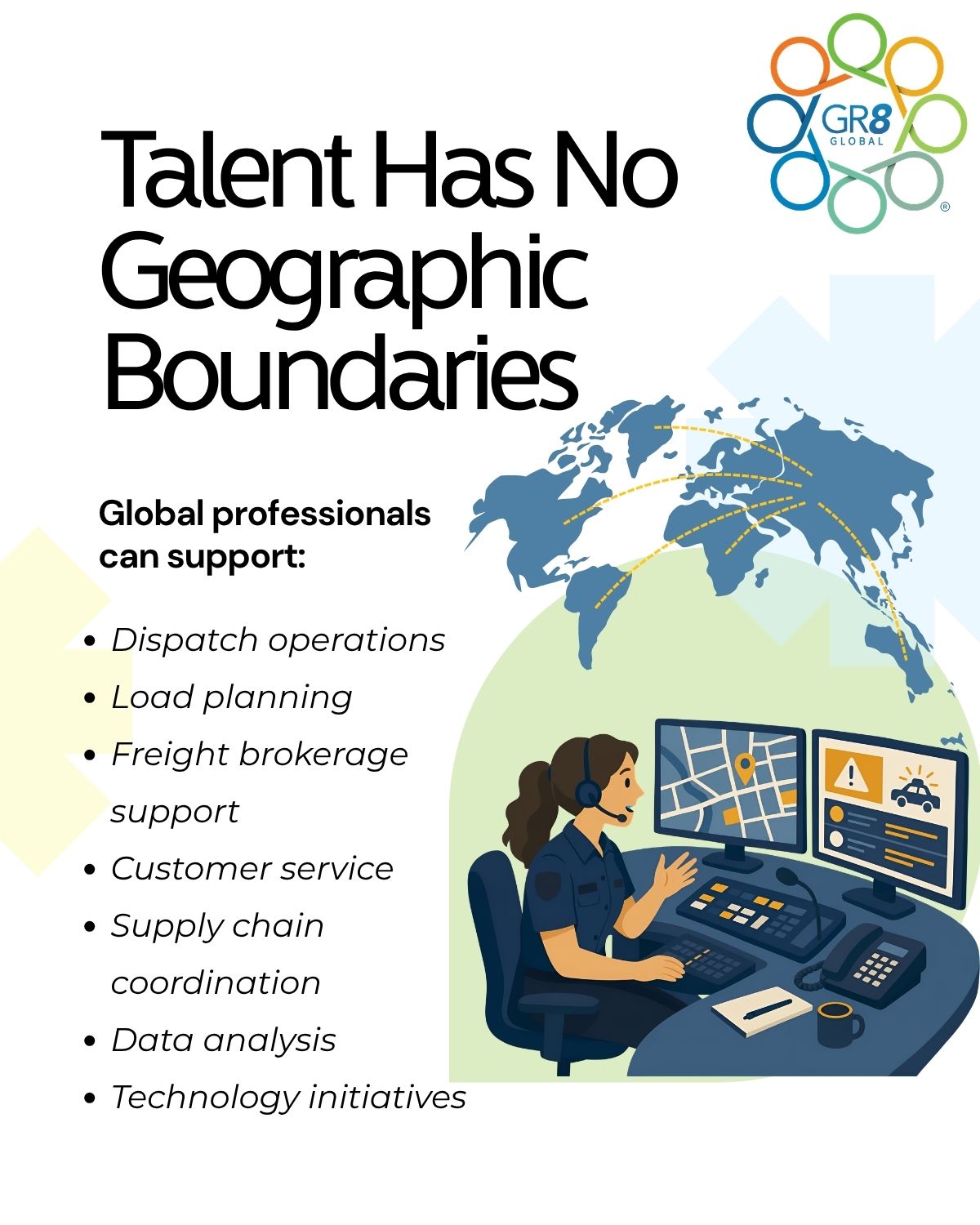
Talent has no boundaries. Organizations can now access global talent pools easier than ever and build scalable support operations. This approach allows transportation companies to:
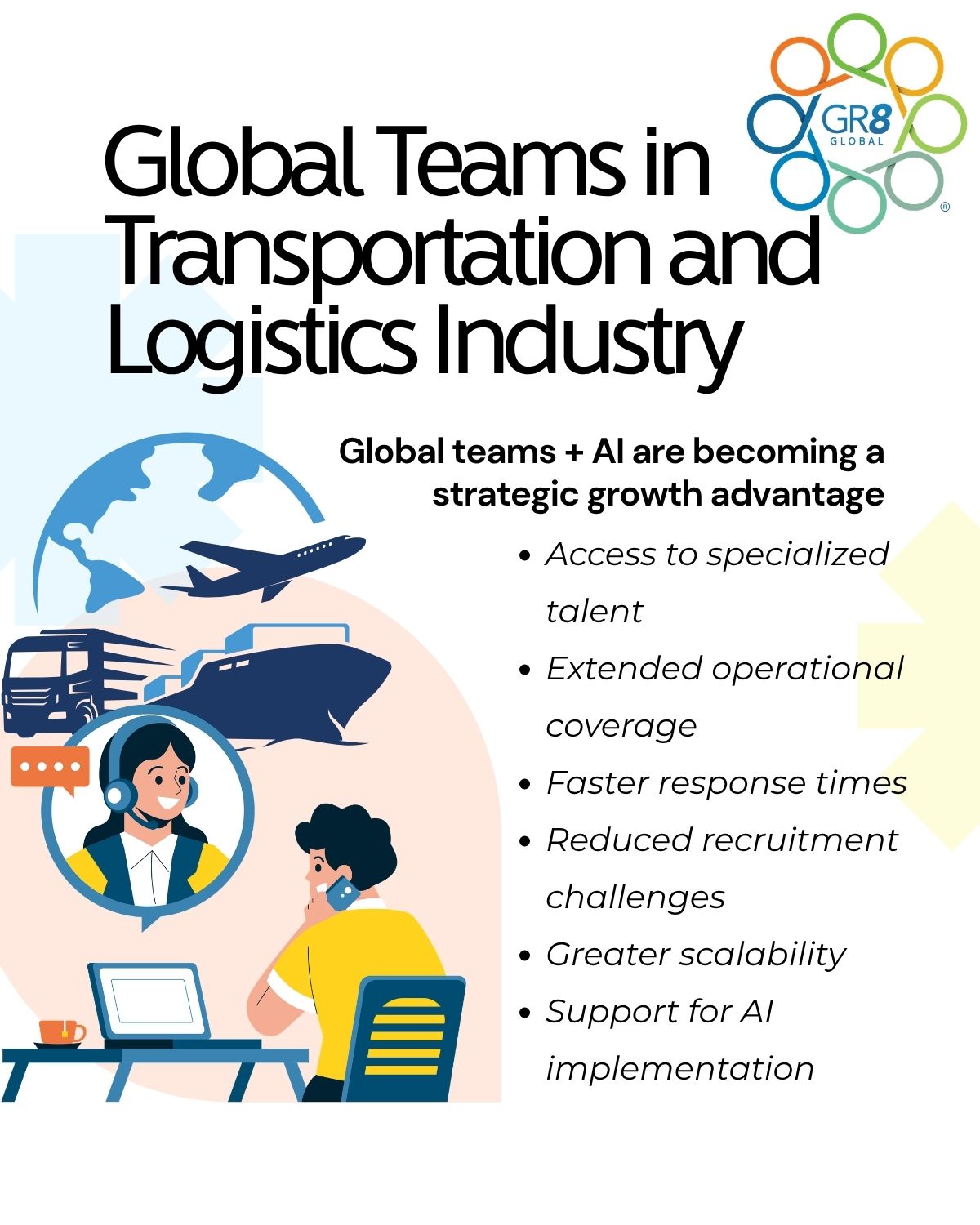
- Reduce recruitment challenges
- Access specialized skills
- Extend operational coverage across time zones
- Improve service responsiveness
- Scale efficiently during periods of growth
For many organizations, global teams are no longer simply a cost-saving strategy. They are becoming a key component of a future-ready workforce and ensure business continuity.
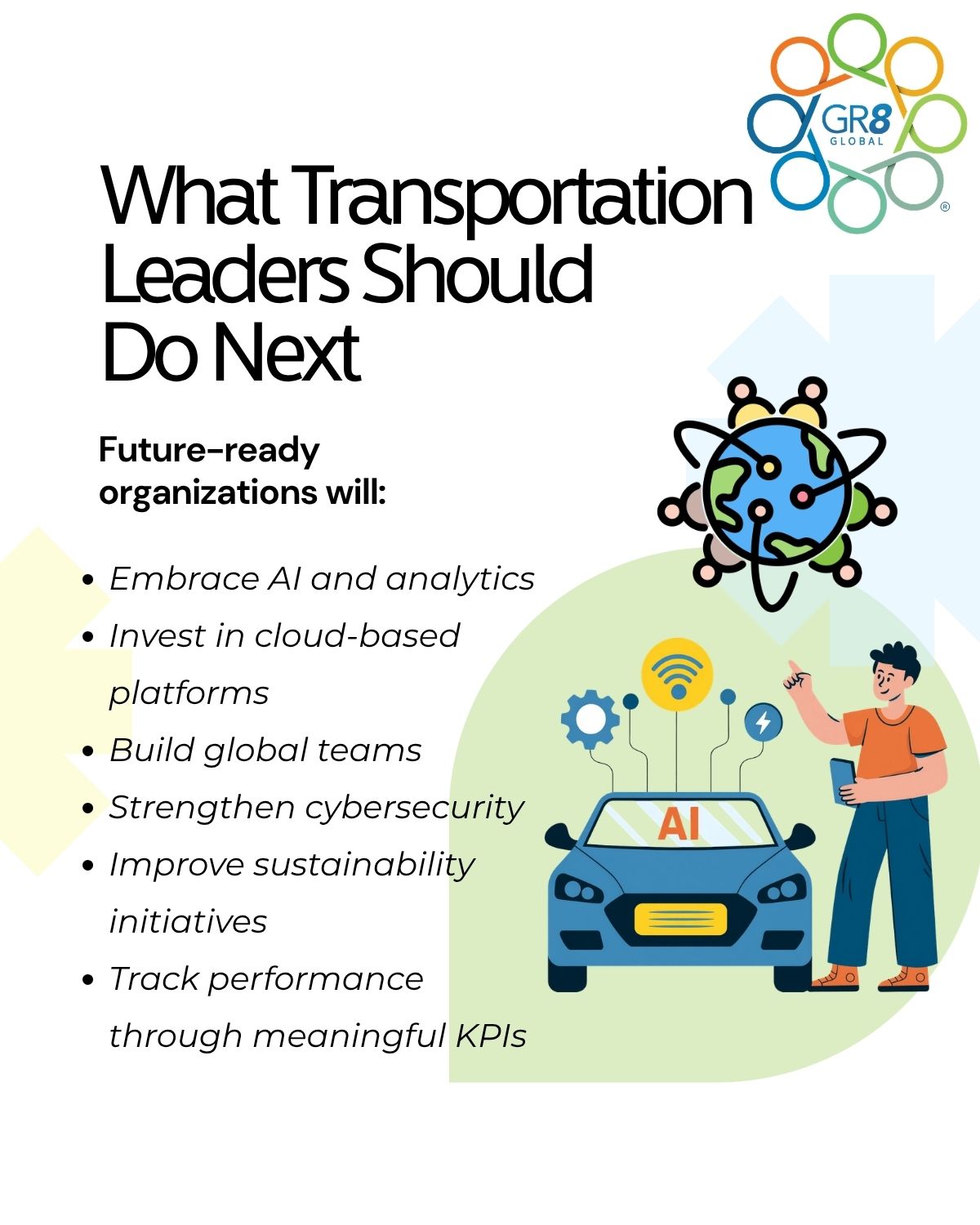
What Transportation Leaders Should Do Next
Looking ahead, the future of transportation depends on combining AI, skilled professionals, and global talent. Companies that embrace this approach can drive growth, improve efficiency, and adapt to industry changes more effectively. Future-ready transportation and logistics leaders should:
- Embrace AI and data analytics to optimize routes, improve fleet performance, and enable predictive maintenance.
- Invest in cloud-based platforms that provide greater visibility, agility, and real-time decision-making.
- Advance sustainability efforts through electrification, alternative fuels, and resource-efficient operations.
- Build global teams that address labor shortages and meet evolving customer demands.
- Strengthen cybersecurity to protect connected vehicles, transportation networks, and critical business systems.
- Measure performance through KPIs related to safety, efficiency, emissions, and customer satisfaction.
Organizations that invest in both AI-powered operations and workforce strategies will be better positioned to address labor shortages, improve service levels, and remain competitive in an increasingly digital industry.
The future belongs to companies that use technology to empower people, expand access to talent, and build more agile, resilient operations.