
Global Leadership: AI, Global Talent, and the Future of Accounting
Discover how firms that embrace AI, integrate global talent, and combine innovation with human expertise will be best positioned for growth in 2026.
Many people fear that AI is going to replace them. CPAs are not going anywhere. Their role is evolving as new tools transform the profession. AI in accounting has now become essential. Thanks to automation, tasks that once took hours can now be completed in seconds, saving the modern accountant a lot of time, but human expertise remains essential. AI comes with a warning: AI-generated content may be incorrect. It requires human supervision. At the same time, it creates new opportunities for those willing to learn and adapt as the landscape keeps evolving.
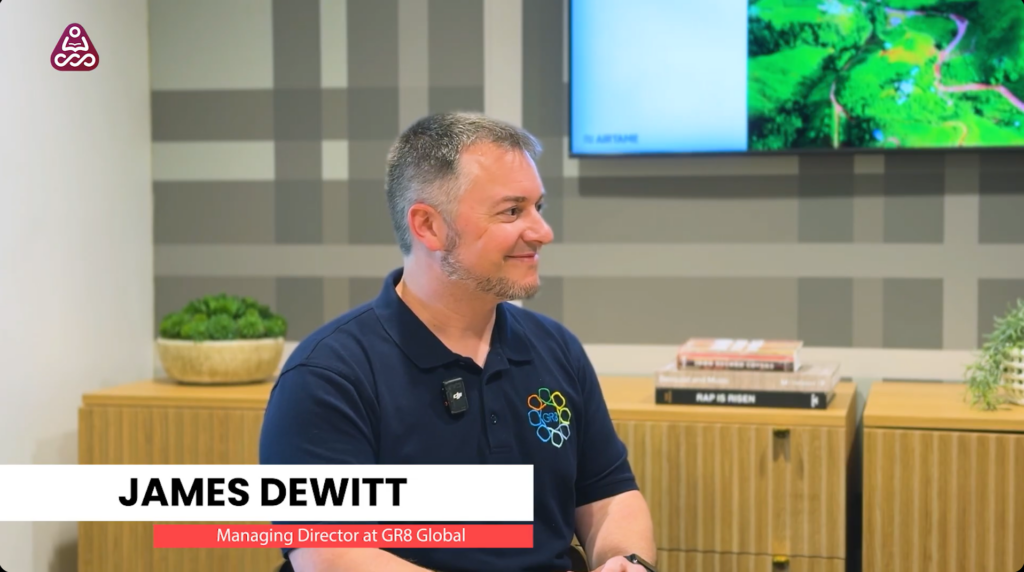
During an episode of Brains Behind Billions, James DeWitt, Managing Director at GR8 Global, shared his perspective on the future of accounting, global talent, leadership, and AI. “The changes in technology and the speed of that change aren’t going to take people out of a job. They’re going to help them get to a better place”, James states. Technology will continue to reshape the profession, but human judgment, communication, leadership, and critical thinking remain irreplaceable.
“The changes in technology and the speed of that change aren’t going to take people out of a job. They’re going to help them get to a better place”
How is Accounting Talent Evolving?
For decades, accounting firms have relied on global staffing primarily as a way to reduce costs. According to DeWitt, that mindset is rapidly changing. Global talent used to be a “low-cost solution to labor” but the mindset is shifting. Everyone knows there is a cost-saving aspect to it, but it is never the starting point of the conversation for James. “People need to know what costs are because they have to budget, but that’s not the driving factor”, DeWitt states “the mindset shift now is to how can I truly integrate that global talent into my firm?”, making sure the global team feels as part as the team as the In-House professionals.
On the interview, James expresses GR8 Global is “bridging the gap to allow a firm to be able to tap into that talent without the complexities of going out and setting up their own entity offshore”, which is already a hassle from the HR perspective and trying to become a preferred employer and attract top talent in a place you’re just going into. GR8 Global has that already covered.
Today, leading firms view global talent as an extension of their organization rather than an outsourcing solution. The focus has shifted toward building integrated teams where professionals collaborate across borders, contribute ideas, and participate in firm culture.
This evolution is driven by several factors:
- Increased demand for accounting talent
- Advances in collaboration technology
- Greater acceptance of remote work
- The need for specialized skills
- A growing emphasis on business scalability
Instead of sending work overseas, firms are investing in high-quality professionals who can contribute from day one with their insights as a professional and become long-term members of the team regardless of their location.
From Outsourcing to Integrated Global Teams
One of the most significant trends reshaping the profession is the move away from traditional outsourcing models.
Historically, firms often viewed offshore resources as a transactional solution. Work was assigned, completed, and returned with minimal interaction.
Nowadays, successful firms are adopting a much different approach.
Integrated global teams:
- Participate in regular meetings
- Understand firm culture and processes
- Collaborate directly with U.S.-based colleagues
- Provide feedback and process improvement suggestions
- Contribute to long-term business growth
This model creates stronger engagement, better performance, and a deeper sense of ownership among team members. “Global talent is no longer just an outsourcing solution. It’s part of a firm’s overall talent strategy” DeWitt states.
As businesses become increasingly digital and geographically distributed, the ability to access talent worldwide is becoming a strategic advantage rather than simply a staffing solution.
How are the Entry-Level Accounting Jobs Changing?
Few topics generate more debate than the impact of AI on entry-level accounting positions. Many professionals worry that automation will eliminate opportunities for new graduates and early-career accountants.
DeWitt offers a different perspective: “AI tools are helping train entry-level professionals so they can get quicker to that review stage, that higher level.” He believes entry-level jobs are not disappearing. Instead, the definition of an entry-level role is changing.
Historically, many entry-level professionals spent significant time collecting client information, organizing documentation, transferring data between systems, and performing repetitive administrative tasks. These activities are increasingly being automated.
However, that does not mean new accountants will have fewer opportunities. It means they may begin their careers at a higher level of responsibility. “Technology is going to allow professionals to become more efficient and move beyond some of the entry-level roles they originally had”, DeWitt affirms.
“Technology is going to allow professionals to become more efficient and move beyond some of the entry-level roles they originally had”
Future entry-level professionals may spend more time:
- Reviewing AI-generated work
- Identifying exceptions and risks
- Analyzing financial information
- Communicating findings
- Supporting advisory initiatives
AI has the potential to accelerate professional development by reducing time spent on repetitive tasks and allowing them to scale faster. “If professionals educate themselves, ask the right questions, and push themselves to upskill, they’ll be primed to advance in their careers”, James says.
Do Professional Certifications Still Matter in the AI Era?
In James’ words: “CPA, EA, and CA designations still matter because they demonstrate commitment and expertise.” Certifications show that the professional spent time preparing for their role. Professional qualifications help separate candidates and signal dedication. James thinks that “AI may change how people learn, but expertise will continue to matter.”
DeWitt believes that human judgement is essential. “Some decisions aren’t just based on numbers. They’re based on people” he says. While AI tools may make information more accessible, employers will continue to value professionals who have demonstrated expertise through rigorous education and certification.
“Human judgment still matters because not every decision is rational from a spreadsheet perspective” DeWitt states. Technology may change how professionals learn and apply knowledge, but foundational accounting principles remain essential.
“Some decisions aren’t just based on numbers. They’re based on people”
The New Competitive Advantage: AI + Global Talent
The future belongs to accountants who know how to leverage AI effectively in their profession. In today’s world, location is no longer an issue. “Talent can really be anywhere”, says DeWitt. A person with the correct qualifications for certain role can be found anywhere in the world. It is now easier to hire remotely if it’s the right fit. Ideally, the new accounting professional should be well-versed in AI technology to:
- Work more efficiently
- Solve complex problems faster
- Deliver greater client value
- Advance into leadership roles more quickly
The combination of technical expertise, business knowledge, and AI proficiency may become one of the most valuable skill sets in the profession.
Accountants with AI skills will have an advantage over accountants without AI skills.
Leadership Remains a Human Responsibility
While much of the conversation focused on technology, one of the most powerful insights centered on leadership.
According to DeWitt, effective leadership is built on “trust and inspire” rather than “command and control”.
Strong leaders:
- Empower their teams
- Encourage learning from mistakes
- Promote accountability with empathy
- Create psychological safety
- Align people around a common mission
AI can generate reports, analyze trends, and provide recommendations.
It cannot build trust, inspire people, or create meaningful relationships.
Those responsibilities remain firmly in the hands of human leaders.
A Career Lesson for the AI Era
When asked for the best advice he would offer young professionals, DeWitt’s answer was simple:
“Don’t try to be perfect at everything”.
Perfectionism often slows growth. Professionals advance by taking action, learning from mistakes, and continuously improving.
The same applies to AI adoption.
Waiting for perfect knowledge or perfect circumstances can leave people behind.
Those who are willing to experiment, learn new tools, and adapt to changing technologies will be best positioned for success.
The Bottom Line
The future of accounting is not a choice between people and technology. It is a partnership between the two.
AI will automate routine work, accelerate learning, and improve efficiency. Global talent models will continue expanding access to skilled professionals around the world. But the qualities that truly drive business success remain deeply human.
Critical thinking. Communication. Leadership. Empathy. Judgment.
As accounting evolves, professionals who combine these human strengths with technical expertise and AI capabilities will be positioned to thrive in the next generation of the profession.