Beyond Headcount: Why Leadership Is Becoming More Valuable Than Management in Professional Services Firms
By James DeWitt and Maria Rubio
Explore what is the difference between management and leadership, and how to incorporate AI and global teams as a growth strategy in the professional services firms.
As professional services firms adapt to artificial intelligence, automation, global talent, and changing client expectations, the distinction between management and leadership is becoming more relevant than ever. While management ensures operational efficiency, leadership drives growth, innovation, talent development, and long-term business value.
As leaders took on larger teams, their responsibilities expanded. That expanded responsibility often increased their influence across the organization. However, in professional services firms, the vision is shifting. It is no longer about people management only. Now more than ever, leadership is becoming more important because firms must create value in new ways. But what is the difference between management and leadership?
For a long time, moving up in a company often meant managing more people. There was a fairly simple relationship between organizational importance and organizational size. People who managed larger teams took on more responsibility and gained influence and power within the organization.
Nobody explicitly said that leadership was measured by headcount, but in many organizations that was an undeniable reality. A larger team meant a larger budget, a larger span of control, and a perception that you were operating at a higher level in the organization.
To be fair, that thinking was not entirely wrong.
Building and managing large teams is difficult. Coordinating people, maintaining quality, meeting deadlines, developing staff, and delivering consistent client service requires skill. Professional services firms have always needed strong managers.
What is changing is the relationship between headcount and value creation.
Professional services firms are moving away from measuring leadership through headcount. Instead, they are measuring the value of leadership and the positive impact they create by inspiring others. While management remains as a core function to ensure efficiency, leadership through influence, visibility, and shared purpose is essential for the company’s growth. The outcomes are vastly difference if you treat people as parts of a machine than if you see them as human, equals, you retain and attract top talent when your heart is in the right place. True leadership comes from inspiring others, not from having authority over them.
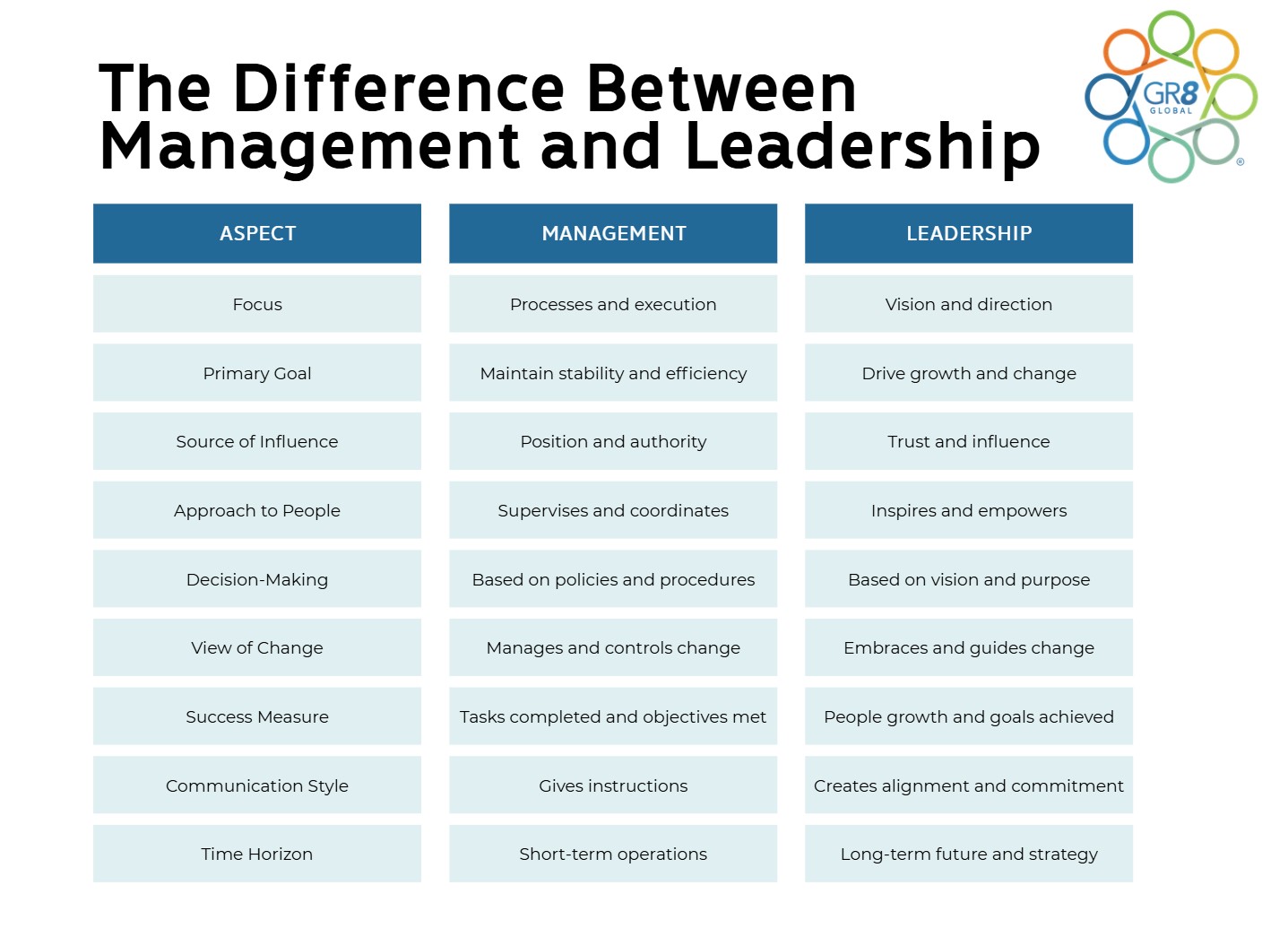
What is the difference between Management and Leadership?
Management keeps teams aligned and operations on track.
It remains essential for building teams, maintaining quality, setting budgets, and meeting client expectations. Management focuses on the present: creating order, ensuring consistency, and making sure work gets done as planned.
Leadership creates direction and momentum.
While management provides structure, leadership inspires people to improve how work gets done. Leaders use influence to encourage innovation, strengthen processes, and guide teams toward better outcomes. It gives direction, their influence drives innovation and creativity. Leaders are focused on the future, the arrow to point where everyone is going. They know the what and why, motivating others to grow within the company in the long-term goals.
Teaching and preparing your team for the future is key to developing leaders who are ready to grow. Good leaders create better professionals who are inspired, driven, and ambitious, always looking toward the future. These professionals understand that client relationships are the cornerstone of the business. At the same time, they feel responsible for the company’s future success, act with accountability, and align processes around a shared goal. One team, one dream.
Additionally, it’s important to consider the technology shaping each industry. Embracing the future is essential for long-term success. Leaders should remain open to technology and global workforce models. Standardized processes play a critical role and can be implemented through consistent workflows across the organization. In addition, automation and artificial intelligence are enabling firms to expand capacity without proportional staffing growth. Effective leadership is demonstrated through empowerment, influence, and the ability to guide teams through change.
Automation, AI, and global workforce models are transforming how firms grow, allowing them to accomplish more work without adding people at the same rate they once did. The combination of these factors is reducing the amount of administrative oversight required for many activities that historically consumed management time.
As a result, firms are beginning to place greater value on something that has always mattered, but may not have always been measured effectively: leadership.
Why does Leadership create more impact than Management?
This is not an argument against management.
Professional services firms still need people who can build teams, allocate resources, monitor workloads, maintain quality standards, and ensure commitments are met. None of those responsibilities are going away. What is changing is where firms create competitive advantage.
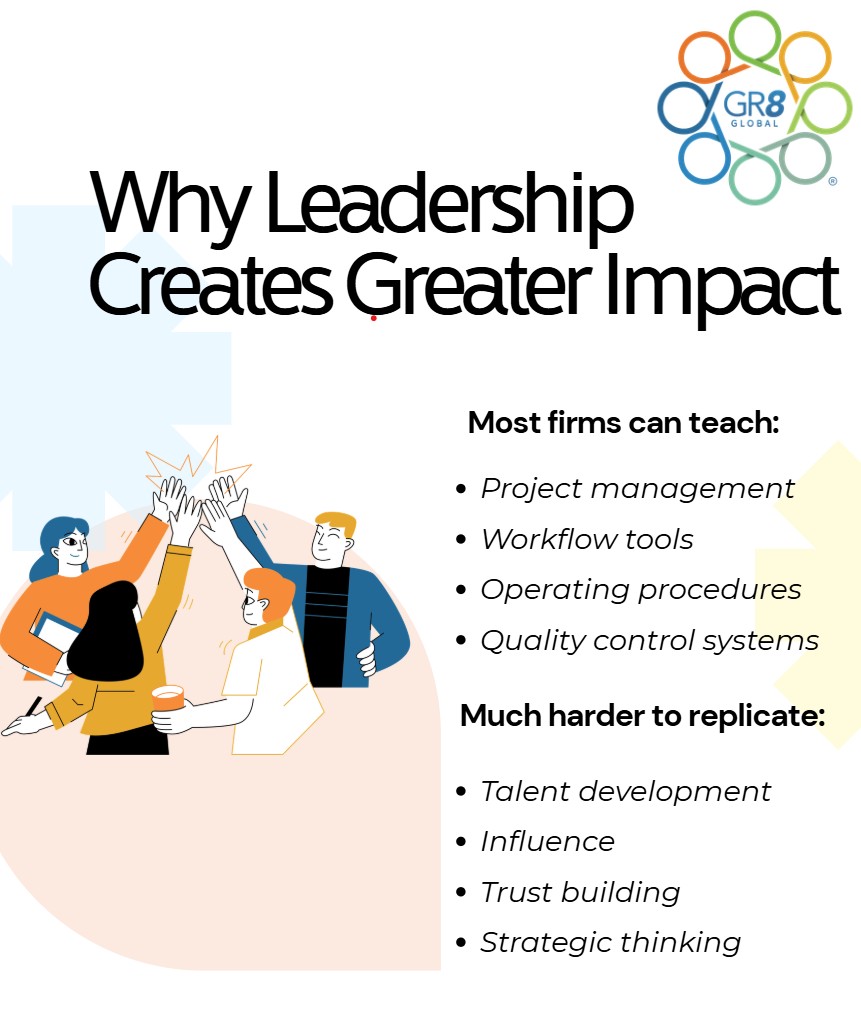
Most professional services firms can teach project management. They can implement workflow tools, build operating procedures, and stablish quality control processes. What is far more difficult to replicate is the ability to develop other people, drive change, improve performance, strengthen client relationships, create accountability, build trust, and align people around a common objective.
Those are leadership capabilities.
Great leaders think beyond team size. Everyone should be moving in the same direction, focused on client satisfaction, responsiveness, and opportunities for growth within the company. They create sustainable, scalable solutions supported by clear goals.
Another important aspect of leadership is talent development, technology adoption, scalability, and the long-term health of the firm. This perspective views people, technology, and resources as enablers of value creation rather than outcomes in themselves.
The distinction becomes important because leadership creates leverage in ways that management alone cannot. Leadership goes beyond management. Managers focus on overseeing processes, teams, and performance. Leaders focus on improving processes, developing future leaders, and elevating results. Leaders create lasting impact that extends beyond day-to-day operations.
As professional services firms rely more on technology, global talent, and scalable operating models, leadership capabilities become critical to turning capacity into sustainable growth.
Why Do the Best Leaders Think Like Owners?
The definition of leadership is evolving. In the past, leaders were often measured by the size of their teams. Today, firms are placing greater emphasis on the value leaders create rather than the number of people they manage.
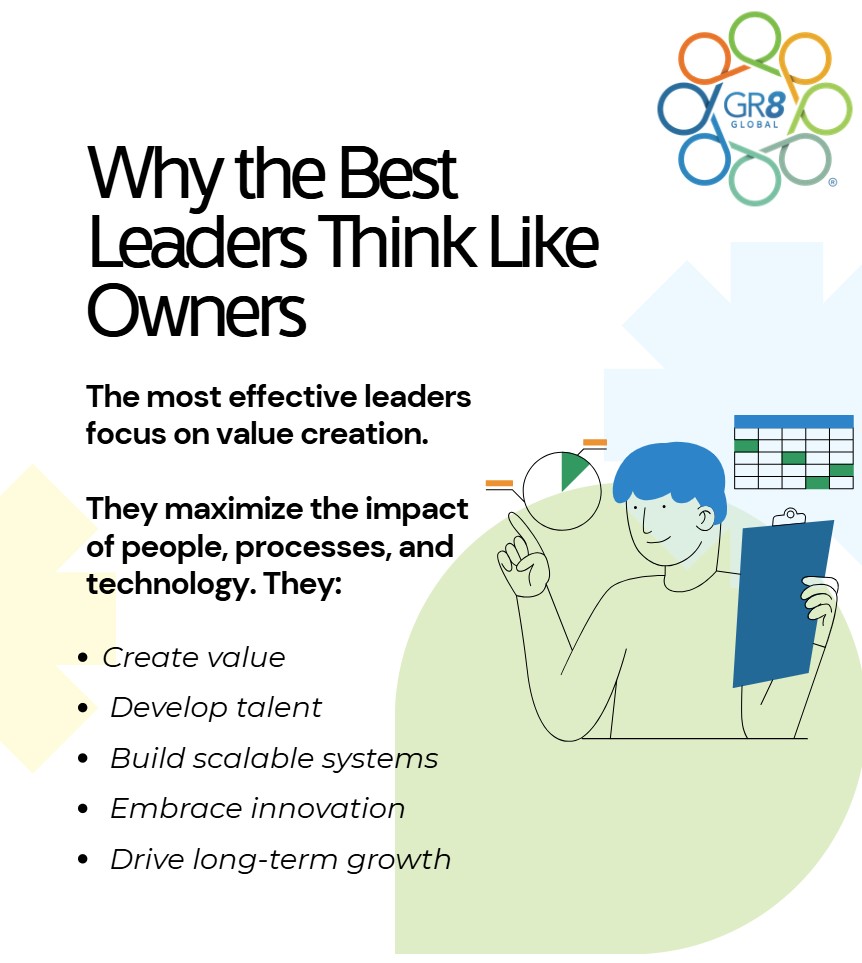
Organizations are increasingly focused on outcomes: improving client service, creating growth opportunities, developing talent, strengthening teams, increasing profitability, and building scalable operations. As a result, the most effective leaders are adopting an ownership mindset, one that prioritizes long-term value creation over organizational size. Capacity alone doesn’t generate growth automatically. Leadership is what transforms that capacity into meaningful achievements.
Leaders who think like owners focus on creating value. They maximize the impact of people, technology, and processes to strengthen client relationships, drive growth, and improve business performance. Rather than viewing headcount as the primary measure of success, they concentrate on developing talent and generating better outcomes with the resources available.
Some of that leverage will come from technology. Some will come from global teams. Some will come from better processes and operating models. But ultimately, all of those advantages still depend on leadership.